Dumpster Dining (Kyle Gunter's Contributions)
A downloadable portfolio piece
The Game
Dumpster Dining is an alternative-controller game where players search for props in a physical garbage can to serve them to racoons. The game was created as part of the Sheridan College Game Design program's Design Week of Fall 2025, a week-long game jam challenging students to create a novel alternate controller with an accompanying original digital game in 4 days.
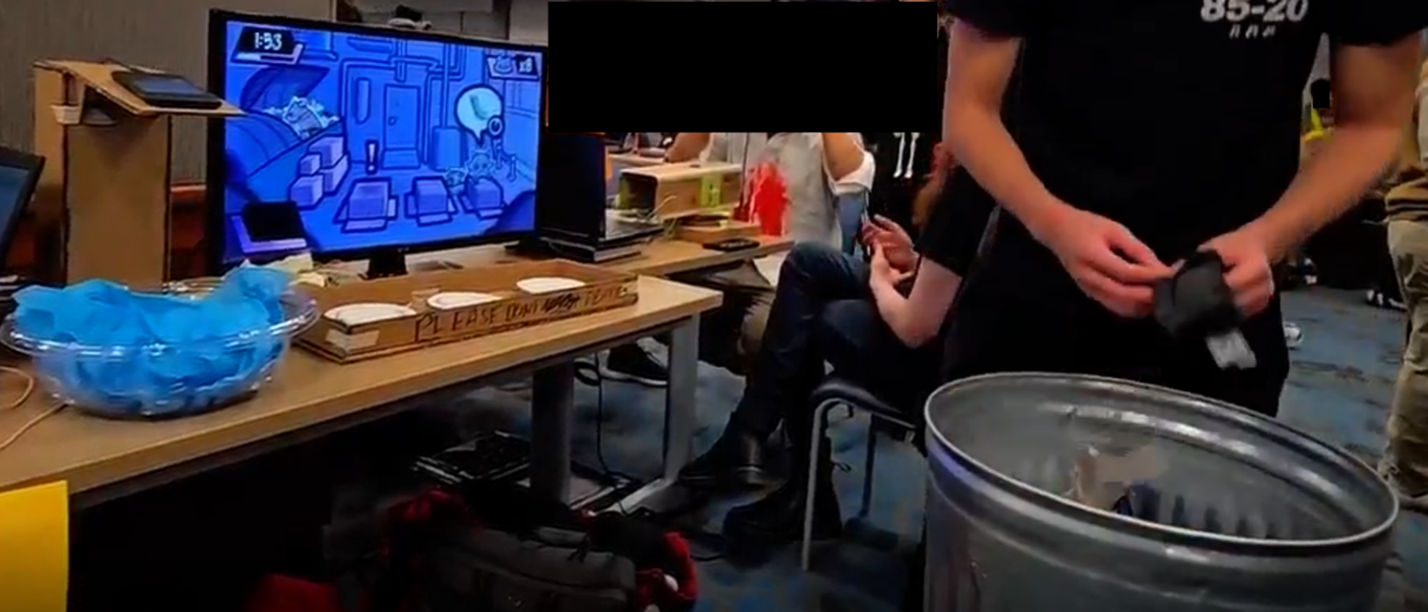
The game was originally developed by 5 people, taking on a 6th to make sound effects and music for its appearance at alt.ctrl gdc 2026.
Kyle Gunter's Contributions
Programming (Gameplay)
My primary role during the game's initial development was implementing the input methods/behaviours, 'customer' behaviours, and overarching game logic.
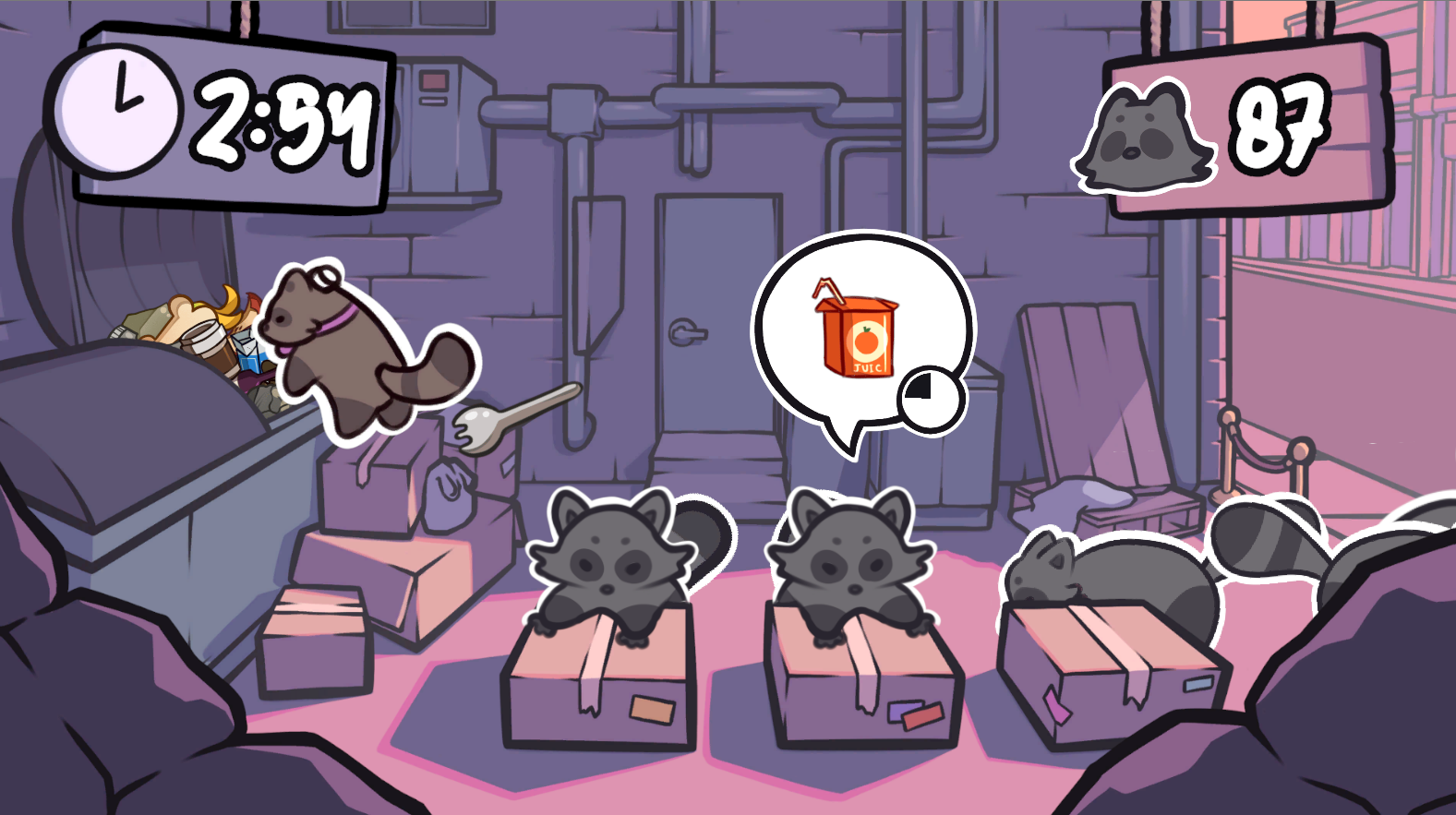
Through this project I implemented multiple control schemes. For scanning items into the game, I created QR code scanning and barcode scanning input methods, and for assigning items to tables I created both a manual and automatic system. Accessing libraries with QR code scanning within Unity was something I had never done before and pushed the boundaries of my skills through the week's challenge.
I also created a simple finite state machine to manage 'customer' behaviours as well as mechanisms to ensure that: Only one 'customer'would attempt to sit at a table at one time; Only one item could be placed at a table at one time; And 'customers' would not leave while the item they wanted was about to arrive.
Programming (UI)
Another area I contributed to was UI, especially in feedback to players, polish and juice. Inspired by the quality of the props and assets created by my teammates, I felt it important to further increase the quality of the game by adding subtle polish to help the scene feel more alive. Specifically, synchronized growing/shrinking of UI elements to give the game a softer, gentle appearance.
To emphasize the soft, squishy appearance, I used spring physics to determine the player's inventory scale, 'jostling' it whenever a new item was scanned to call attention to the accepted input.
After further development, I added an end-screen to display the player's score, sequencing animations to create a higher-quality result than fades or instant appearances.
Balancing
Lastly, I created a tool to adjust difficulty over the course of the game by modifying the length of time 'customers' were willing to wait over the course of the game. I simulated a simplified version of the game to estimate how often players would be able to serve a 'customer' over the course of the game based on an arbitrary formula.
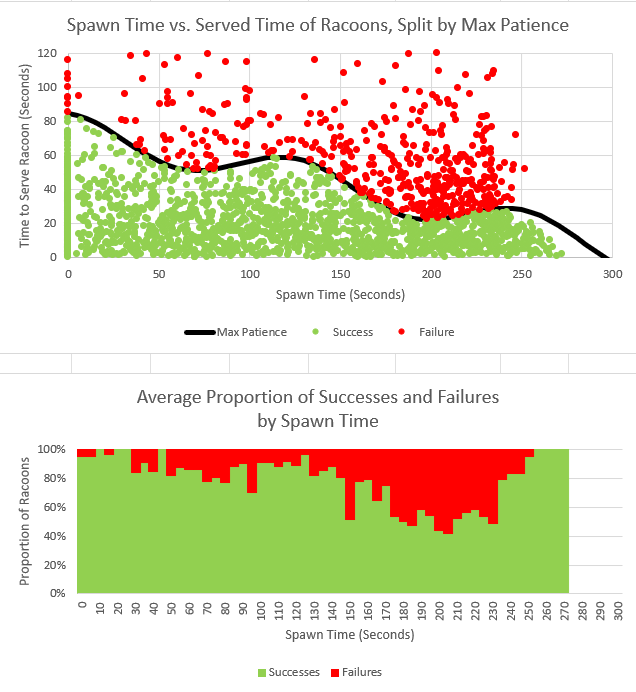
Using this tool I was able to refine the game by ensuring that most players would start with successes to learn how to play the game, then mostly increase in difficulty over the course of the game with some decreases in difficulty so that players can often feel their success.